
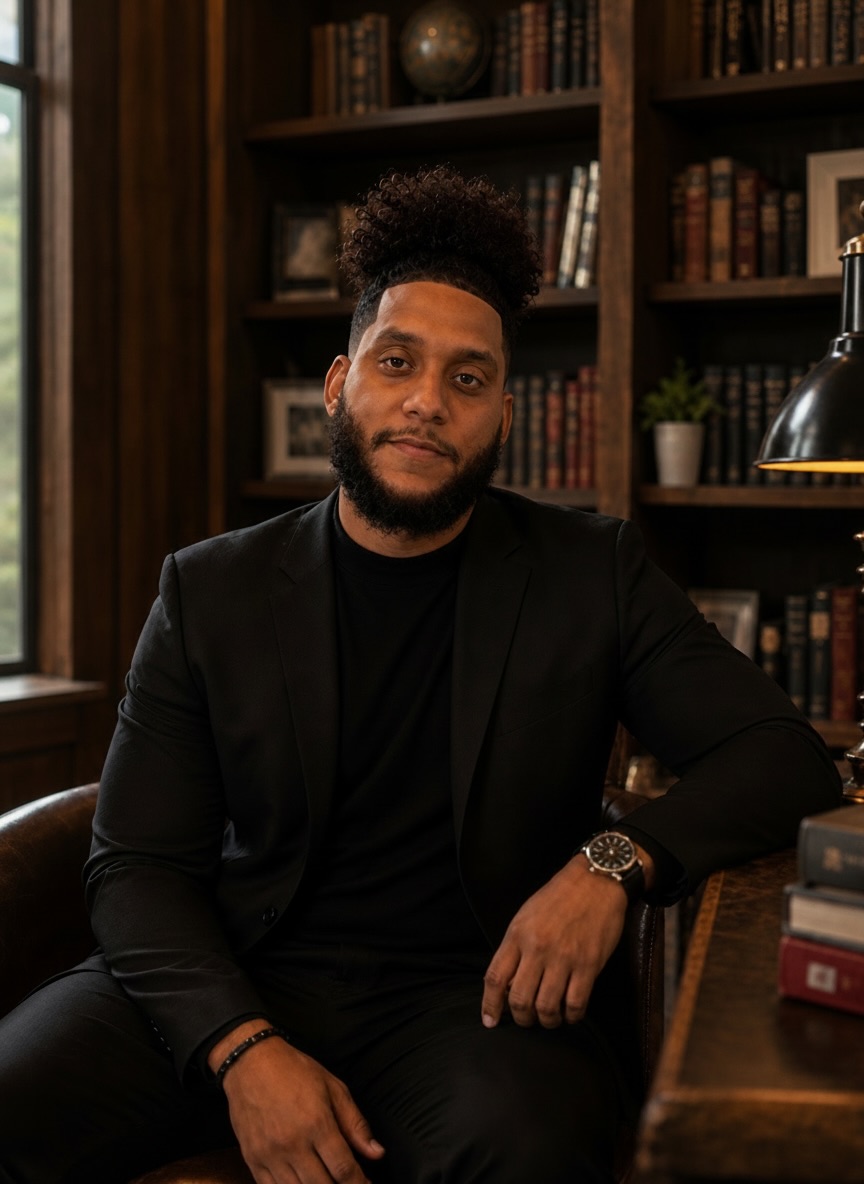
I grew up in Brooklyn, and the thing about New York is this: it doesn't give you room to figure yourself out in private. Every rite of passage happens on a crowded train, every heartbreak unfolds on a street corner where somebody's watching. The city is witness and accomplice both—it shapes you while you're trying to shape yourself. When I wrote Loverboy, Still, I kept coming back to that tension: how do you become a man when the whole city's got an opinion about what that means?
These eight novels understand that. They're set in New York, but they're really about what it costs to grow up here—the specific gravity of trying to find your own voice when the city's already screaming at you. If you loved what Bryan Washington did with Houston in Lot or how Jamel Brinkley maps the interior lives of Black men in Brooklyn, these are your people. They taught me how to write about place as character, how to let a neighborhood tell the truth about who you're becoming.
The List
1. The Nickel Boys by Colson Whitehead
Whitehead's not writing NYC here, but The Nickel Boys taught me everything about writing masculinity under pressure—how institutions try to break you into their version of manhood. The formal precision, the way he lets rage sit quiet on the page until it can't anymore—that's the energy I wanted for Gregory Mitchell's voice. If you're reading Loverboy, Still for its interrogation of what it means to be a man in a world designed to diminish you, start here.
2. Heavy: An American Memoir by Kiese Laymon
Kiese Laymon's Heavy is Mississippi-rooted but the architecture of it—the way he writes about his body, his mother, the weight of becoming—cracked open how I thought about voice. Laymon writes in second person to his own mother and it's the most intimate act of excavation I've ever read. When I needed to figure out how Gregory talks to himself about desire and shame, I kept Heavy on my desk. This book is a masterclass in turning coming-of-age into reckoning.
3. Real Life by Brandon Taylor
Brandon Taylor's Real Life takes place in a Midwest college town, but Wallace's interiority—the way he navigates white spaces, the quiet violence of microaggressions, the ache of desiring men who can't see you whole—that's the texture I wanted for Gregory's emotional life. Taylor writes loneliness like architecture. He taught me how to make a reader feel claustrophobia even in wide-open scenes.
4. The Secret Lives of Church Ladies by Deesha Philyaw
Deesha Philyaw's Church Ladies is set in the South, but what she does with desire and secrecy and Black women navigating the surveillance of their own communities—that's the same pressure-cooker I wanted to build around Gregory's romantic life in Brooklyn. Philyaw writes hunger without apology. She showed me how to let characters want things they're not supposed to want and never flinch from it.
5. An American Marriage by Tayari Jones
Tayari Jones writes Atlanta, but An American Marriage is the blueprint for how to write love that survives impossible circumstances—and how to write the moment it doesn't. Jones never lets her characters off easy; she makes them earn every inch of grace. That relentlessness, that refusal to let love be simple, is what I chased in Loverboy, Still. If you're here for the romantic stakes, for what it costs to love someone when the world's built to separate you, read this immediately.
6. A Lucky Man by Jamel Brinkley
A Lucky Man is Brooklyn cover to cover, and Brinkley's stories are the closest comp to what I'm trying to do—Black men rendered with full emotional complexity, no shortcuts. The title story alone is a clinic on writing masculine vulnerability without softening it into something palatable. Brinkley sees his characters with such clarity it's almost unbearable. He taught me to write Gregory the same way: tender, flawed, fully human.
7. Here for It by R. Eric Thomas
Thomas writes Philly and Baltimore, but his memoir is New York in spirit—big, loud, unapologetic, full of people trying to figure out how to be themselves in public. Here for It is hilarious and heartbreaking, often in the same sentence, and it showed me how to write about queerness and Blackness without making either one a tragedy. Thomas writes joy as resistance, and that permission—to let Gregory have moments of levity even in the thick of heartbreak—came from this book.
8. Here Comes the Sun by Nicole Dennis-Benn
Nicole Dennis-Benn's novel is set in Jamaica, but the way she writes about desire, class, and the gulf between who you are and who your family needs you to be—that's Brooklyn too. Here Comes the Sun taught me how to write characters who love each other and hurt each other in the same breath, who carry the weight of community expectation like a second skin. If you're drawn to Loverboy, Still for its family dynamics and the cost of ambition, Dennis-Benn is essential.
Your Turn
These are the books that made me believe I could write Loverboy, Still—a Brooklyn love story that refuses easy answers, that takes masculinity and desire and growing up seriously. If you haven't grabbed your copy yet, it's waiting for you here. Gregory Mitchell's got a story to tell, and I think you'll recognize some of these writers in his voice—the same rigor, the same tenderness, the same refusal to look away.