
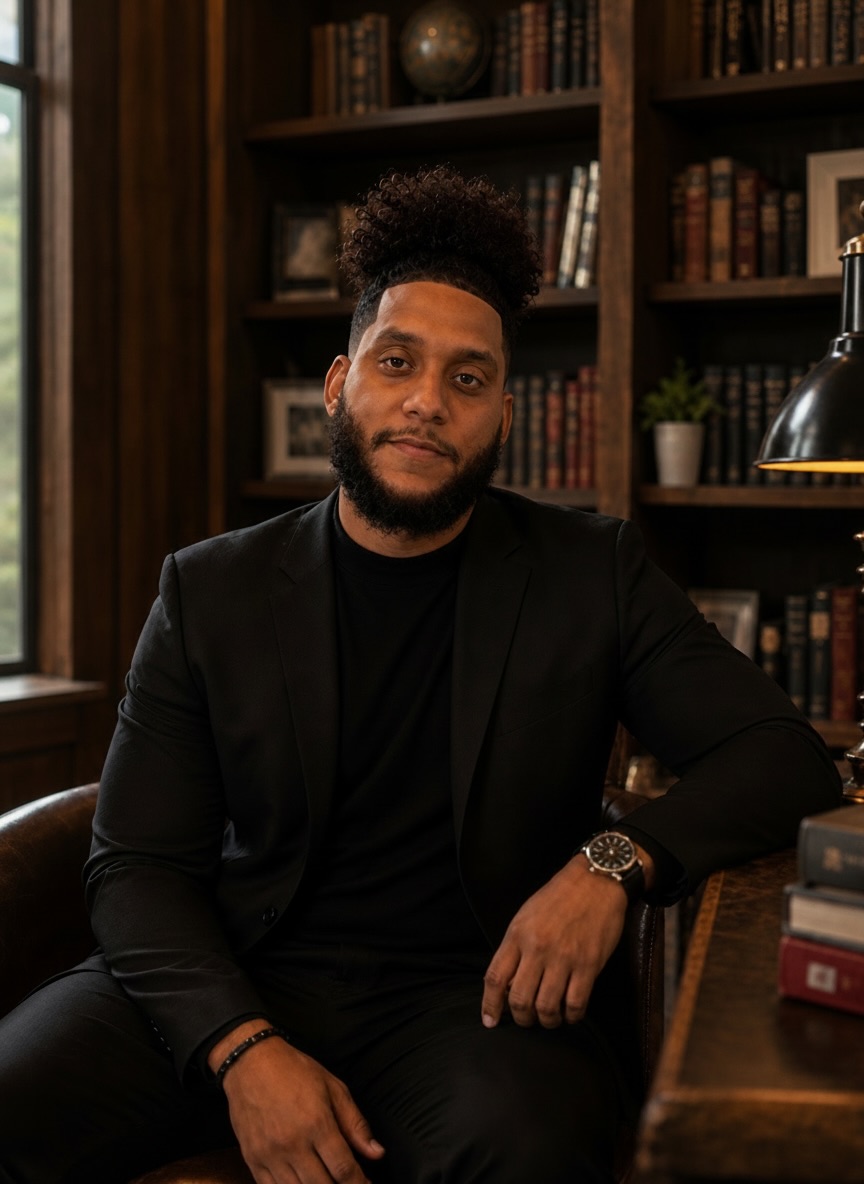
When I sat down to write Loverboy, Still, I knew one thing before I knew the plot, before I knew Gregory Mitchell's full arc, before I understood the shape of his longing: this story could only happen in Brooklyn. Not just set in Brooklyn — made by it, breathed into life by the particular physics of Crown Heights in summer, the way light hits brownstone stoops at 6 a.m., the specific kind of solitude you can feel on the 3 train at rush hour surrounded by a thousand bodies.
I'm from Brooklyn — born and raised, before I moved west to LA four years ago — and the borough is encoded in my molecules. It's in the rhythm of my sentences, the way my characters move through space, the silences they keep. When you grow up there, you learn that place isn't neutral. Place has opinions. Place makes demands. In Kiese Laymon's Heavy, Mississippi is a character that won't let him go, a haunting that shapes every choice. In Justin Torres's We the Animals, upstate New York is both refuge and cage. Brooklyn, in my novel, operates the same way — it's the third party in every scene, the unspoken collaborator in Gregory's search for intimacy.
The Loverboy Walks These Streets
Gregory Mitchell is what I call a loverboy — not in the player sense, not in the smooth-talker sense, but in the way he leads with his heart even when it's tactical suicide. He wants to be seen, to be held, to be known, and Brooklyn is the only place I could imagine that particular brand of yearning taking shape. The city teaches you to armor up, to move fast, to protect your softness — but it also creates pockets of wild tenderness. A rooftop in Bed-Stuy at 2 a.m. The back corner booth at a diner on Nostrand. The way someone looks at you on the platform at Franklin Ave and you both know you'll never speak but the recognition is everything.
I wanted to capture that — the way Brooklyn makes space for vulnerability even as it hardens you. Gregory's interior life is shaped by the borough's contradictions: the need to stay guarded and the hunger to crack yourself open, the loneliness of a crowded block, the intimacy of strangers who share your commute every morning. Brandon Taylor does this brilliantly in Real Life with the Midwest — place as pressure system, place as the thing you're constantly negotiating. For Gregory, Brooklyn is the same. It's not backdrop. It's the condition under which love becomes possible, or impossible, or both at once.
Memory, Mythology, and the Brownstone Dream
One of the things I kept coming back to while writing was the idea of Brooklyn as mythology — the version of the borough that exists in our collective imagination versus the one you actually live in. Gregory is caught between those two Brooklyns. There's the dream version: brownstone stoops, tree-lined streets, the romantic idea of building a life in the place that raised you. And then there's the real version: the displacement, the rent you can't afford, the slow erasure of the landmarks that made you who you are.
Colson Whitehead writes about this tension in his NYC work — the city as palimpsest, every generation writing over the last. I wanted Loverboy, Still to sit in that same space. Gregory walks streets that are both familiar and foreign, chasing a version of intimacy that may only exist in memory. The Brooklyn he loves is slipping away, and part of his struggle is figuring out whether the love he's chasing is just another version of that — something beautiful that can't be held onto.
Masculinity in Transit
Brooklyn also taught me how to write Black masculinity in motion. The borough doesn't let you be one thing. You're code-switching on the train, you're vulnerable in your apartment and armored on the corner, you're tender with your boys in ways you'd never admit in daylight. Gregory's masculinity is shaped by those negotiations — the constant calibration of how much softness you can show, how much longing you can voice, how much of yourself you can offer before it becomes a liability.
Mateo Askaripour's Black Buck explores a different kind of code-switching — corporate, transactional — but the underlying question is the same: how do you stay whole when the world demands you fragment? For Gregory, Brooklyn is both the place that fractures him and the place that might put him back together. Every block is a negotiation. Every interaction a recalibration.
The Audiobook — Gregory's Voice, Brooklyn's Pulse
When it came time to produce the audiobook preview — the first chapter, free to stream at /audiobook — I knew it had to be performed in Gregory Mitchell's voice, the character voice I built for him. Not my voice as the author, but his. The narration needed to carry the rhythm of Brooklyn, the cadence of someone who grew up translating himself across contexts, the particular music of a man trying to articulate longing without losing his cool.
Listening to Gregory tell his own story, you hear the city in every pause, every inflection. The way he moves between memory and present tense mirrors the way you move through Brooklyn itself — past and present collapsing into each other, every corner a ghost of something that used to be there. It's intimate in a way that reading can't quite capture, the same way walking those streets is different from looking at a map.
Place, Intimacy, and the Loverboy's Gamble
At its core, Loverboy, Still is about the risk of staying soft in a place that asks you to harden. It's about the gamble of leading with your heart when the city — and everyone in it — is moving too fast to notice. Brooklyn made me, and it made Gregory, and the novel is my attempt to honor both the beauty and the brutality of that inheritance.
If you want to hear Gregory's Brooklyn, to feel the pulse of Crown Heights in his sentences, stream Chapter 1 for free. If you want to hold the whole story in your hands, grab the book and walk these streets with us. Brooklyn's waiting. So is Gregory. So, if I'm being honest, am I.