
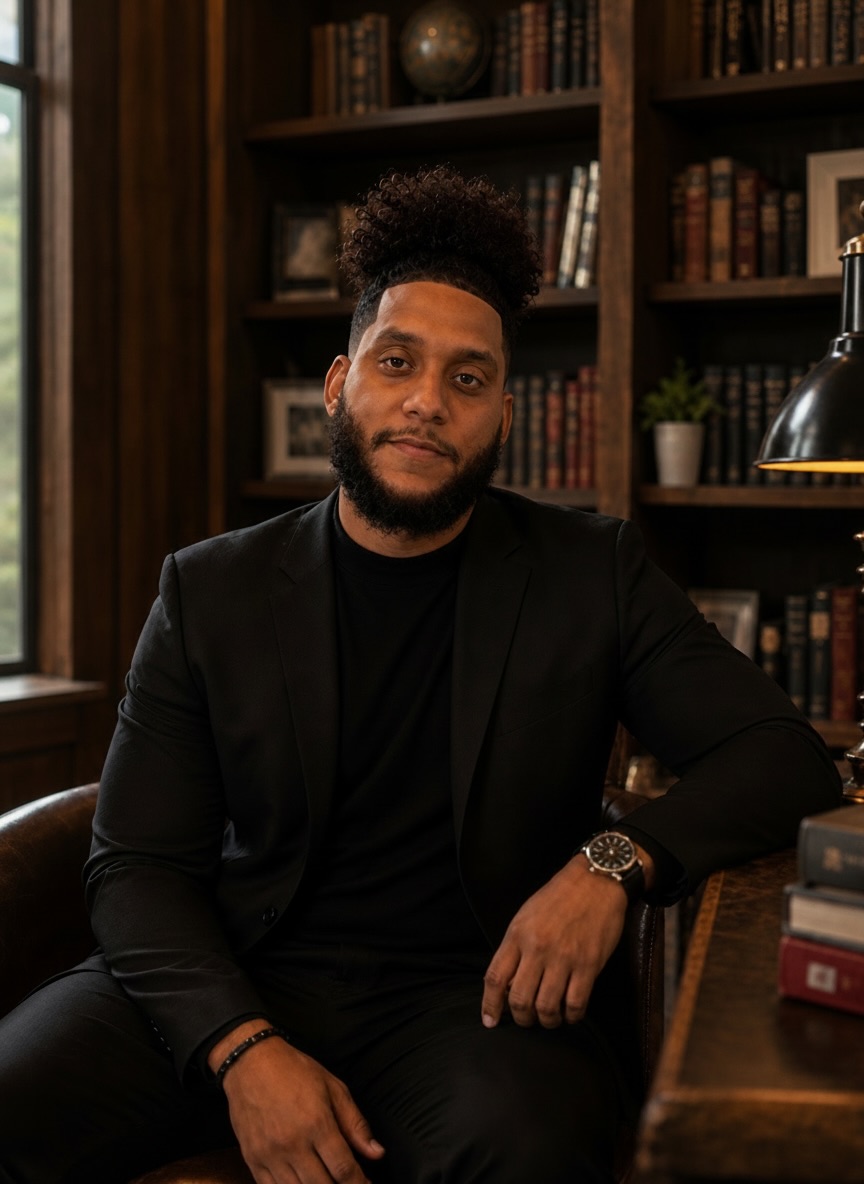
When I titled my novel Loverboy, Still, I knew the word would do work. "Loverboy" carries weight — it's seductive, it's diminishing, it's a taunt and a confession all at once. But in Black storytelling, especially the new wave of literary fiction interrogating Black masculinity, the loverboy is an archetype worth reclaiming. Not the smooth operator or the player, but the man who feels too much, who leads with vulnerability, who refuses the armor that America tells him to wear.
This is the lineage I was writing into. Not inventing it — joining it.
The Loverboy as Refusal
In Bryan Washington's Lot, the narrator Nicolás watches his father leave and return, leave and return, all while learning what it means to stay soft in a world built to harden you. In Ocean Vuong's On Earth We're Briefly Gorgeous, Little Dog writes his mother a letter she'll never read, each sentence an act of devotion that the world calls weakness. In Brandon Taylor's Real Life, Wallace navigates desire and violence in a Midwestern lab, his tenderness a radical act in a space that punishes it.
These are loverboys. Not because they seduce, but because they refuse the script. They love loudly in quiet rooms. They ache in public. They carry their softness like a knife.
When I created Gregory Mitchell, the protagonist of my novel, I wanted him to live in that tradition. A Brooklyn kid who falls hard, who doesn't apologize for it, who lets love remake him even when it breaks him. The loverboy archetype, at its best, is about emotional courage — the kind that gets Black men killed in the real world and erased in the cultural one. I wanted to give Gregory space to be that, fully.
The Archetype's Roots
The loverboy has older roots, of course. You see him in James Baldwin's work — men who love across borders of race, class, and shame, who won't let the world's cruelty turn them cruel. You see him in the way Colson Whitehead writes Elwood in The Nickel Boys, a boy whose belief in love and justice becomes both his salvation and his tragedy. You see him in Robert Jones Jr.'s The Prophets, where Samuel and Isaiah's love on a plantation is an act of defiance so total it rewrites what survival can mean.
What makes the contemporary loverboy different is context. We're writing him in an era when Black masculinity is both hyper-visible and hyper-policed, when tenderness is read as performance, when every Black man's interiority is up for public debate. The loverboy, in 2025, is a fuck-you. He's proof that Black men contain multitudes, that we are not reducible to trauma or triumph, that we love in ways the culture hasn't learned to name yet.
Why 'Still'
The title Loverboy, Still is doing two things. First, it's claiming the word. Gregory is a loverboy — not in the diminutive sense, but in the sense that love is his primary mode of being in the world. He leads with it. He stumbles because of it. He survives it, barely.
But "still" is the hinge. It means yet, as in: after everything, he's still standing. It means motionless, as in: he's trapped in this feeling, can't move past it. It means even now, as in: you thought he'd outgrow this, but no — he's still soft, still open, still foolish enough to believe.
When you listen to the audiobook — performed in Gregory Mitchell's voice, the character voice I built for him — you hear that duality. He's confessing, yes, but he's also defending himself. Every sentence is an argument for why tenderness matters, why it's worth the cost.
Loverboys in the New Canon
What excites me most is that the loverboy is becoming a recognizable figure in Black literary fiction. Brandon Taylor writes him as the grad student who can't stop feeling. Justin Torres writes him as the youngest brother in We the Animals, whose desire unmoors him from his family. Tayari Jones writes him as Roy in An American Marriage, a man whose love is his undoing and his only compass. Deesha Philyaw gives us glimpses of him in the men her women characters orbit — men who don't know how to name what they want but feel it with their whole bodies.
These books are in conversation with each other, and I wanted Loverboy, Still to join that conversation. To say: here's what the loverboy looks like in Brooklyn, in 2025, in a world that still doesn't know what to do with Black men who love without apology.
The Risk of Softness
Here's the thing: being a loverboy is dangerous. Not metaphorically. Literally. Black men who lead with vulnerability, who refuse the performance of hardness, are punished for it — by other men, by institutions, by the culture at large. The loverboy archetype, then, isn't just a literary device. It's a political position. It's a claim that Black men deserve interiority, that our feelings are not secondary to our survival, that we are allowed to be tender even when the world is not.
I wrote Gregory Mitchell as a loverboy because I wanted to give him that permission. And I wanted readers — especially Black readers, especially Black men — to see themselves in him. To recognize the ache. To know they're not alone in it.
Read It, Feel It
If you're drawn to this lineage — if you loved Real Life or Lot or The Prophets, if you want fiction that takes Black masculine interiority seriously, if you're tired of stories where tenderness is treated as a flaw — then Loverboy, Still is for you. It's a love story, yes. But it's also a manifesto. A defense of feeling. A map for how to stay soft in a world designed to break you.
Get the book and decide for yourself what a loverboy can be.