
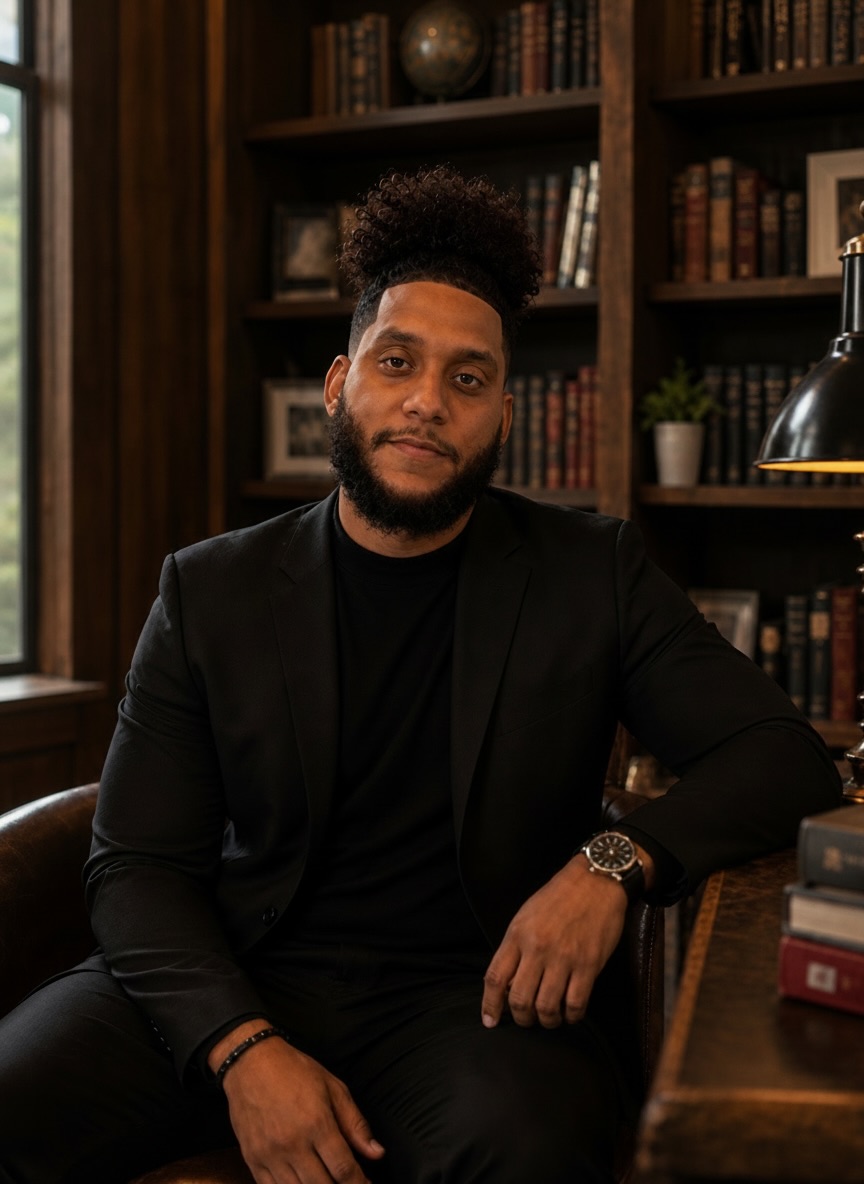
There's a shift happening in contemporary Black literary fiction, and I felt it long before I had the language to name it. When I started writing Loverboy, Still, I was trying to answer a question that had been haunting me for years: what does it mean to write a Black man who is allowed to be soft?
Not soft as in weak. Soft as in human. Soft as in capable of tenderness, vulnerability, emotional complexity that doesn't resolve into rage or stoicism or the performance of invulnerability we've been taught to associate with masculine survival.
The 2020s Template: Tenderness as Craft
Look at the books that have shaped this decade. Bryan Washington's Memorial gave us two men—one Black, one Japanese—learning to love each other while grieving their mothers, cooking elaborate meals as acts of care. Mateo Askaripour's Black Buck showed us a young man navigating ambition and identity with sharp humor and vulnerability. Ocean Vuong's On Earth We're Briefly Gorgeous—though not explicitly about Blackness—modeled what it looks like to write desire, queerness, and tenderness as inextricable from the body's survival.
These writers gave me permission. Not to write like them, but to recognize that the project I was already committed to—centering a Black man's emotional life without apology—belonged to a larger literary conversation. When Washington writes food as intimacy, when Askaripour writes ambition as self-discovery, when Vuong writes desire as a form of documentary, they're all doing the same thing: refusing the flattening of masculine interiority.
The Gregory Mitchell Problem
My protagonist, Gregory Mitchell, is a problem for certain readers. He's not hypermasculine. He's not politically legible in the ways we've come to expect from Black male characters. He's a visual artist living in Brooklyn, navigating a relationship that has already ended by the time the novel begins, and his primary concern is not systemic oppression but the small, devastating question of whether he was ever truly loved.
That's the gamble of Loverboy, Still. I wanted to write a Black man whose interiority was the entire architecture of the book. Not his proximity to violence, not his performance of strength, not his utility to a white gaze or a protest narrative—just his inner life, in all its messiness and longing and ordinary beauty.
This is what the 2020s have taught me is possible. The literary culture has shifted just enough to make room for books where Black men are allowed to be tender without that tenderness being exoticized or treated as exceptional. Where a character like Gregory can be the center of his own story, and that story can be primarily about love.
Hood Literary Fiction as an Intimate Genre
I've started thinking of Loverboy, Still as hood literary fiction—not in the genre sense, but in the geographic and emotional sense. Gregory moves through Brooklyn with the fluency of someone who knows these blocks, these corner stores, these bus routes as the textures of his interior life. The hood isn't backdrop; it's character. It's the place where tenderness has to fight to exist, and sometimes wins.
This is what connects my novel to the lineage of Bryan Washington's Houston, Justin Torres's upstate New York in We the Animals, the urban emotional landscapes where so much contemporary Black literary fiction is being written. These are books that understand place as intimacy, that know the corner store can hold as much narrative weight as the climactic argument, that treat the rhythms of city life as inseparable from the rhythms of love and loss.
The Audiobook Question
When we produced the audiobook for Loverboy, Still, I knew it had to be narrated by Gregory Mitchell—not by me, but by the character voice I'd built for him over years of revision. The first-person narration of the novel is so interior, so tied to Gregory's particular cadences and obsessions, that hearing it in the protagonist's voice was the only way to preserve the intimacy of the text.
This was a craft decision, but also a political one. I wanted listeners to hear Gregory tell his own story, to experience the tenderness of his perspective without mediation. The audiobook preview is available here if you want to hear what I mean—it's Gregory's voice, not mine, carrying the weight of that vulnerability.
What We're Building Together
The truth is, I don't know if Loverboy, Still succeeds at what it's trying to do. That's for readers to decide. But I know it belongs to a moment—this moment—when Black literary fiction is insisting on complexity, tenderness, and emotional range as non-negotiable elements of craft.
We're building a canon together, those of us writing in the 2020s. A canon that refuses to choose between political urgency and intimate storytelling, that knows Black masculinity contains multitudes, that treats love as seriously as it treats survival. Writers like Robert Jones Jr. in The Prophets and Tayari Jones in An American Marriage have shown us that this kind of emotional excavation is possible, necessary, transformative. I'm grateful to be part of that conversation, even in the margins.
If this resonates with you—if you're interested in literary fiction that centers Black men's emotional lives, that treats Brooklyn as a site of intimacy, that takes tenderness seriously as a narrative project—you can get Loverboy, Still here. It's a love story. It's a meditation on what it means to be seen. It's my contribution to a decade that's teaching us how to write masculinity differently.
Shop the books from this essay
- Memorial — Bryan Washington
- On Earth We're Briefly Gorgeous — Ocean Vuong
- We the Animals — Justin Torres
- Black Buck — Mateo Askaripour
Bookshop.org supports independent bookstores — every purchase splits revenue with an indie shop of your choice. Affiliate links; Joseph earns a small commission at no cost to you.