
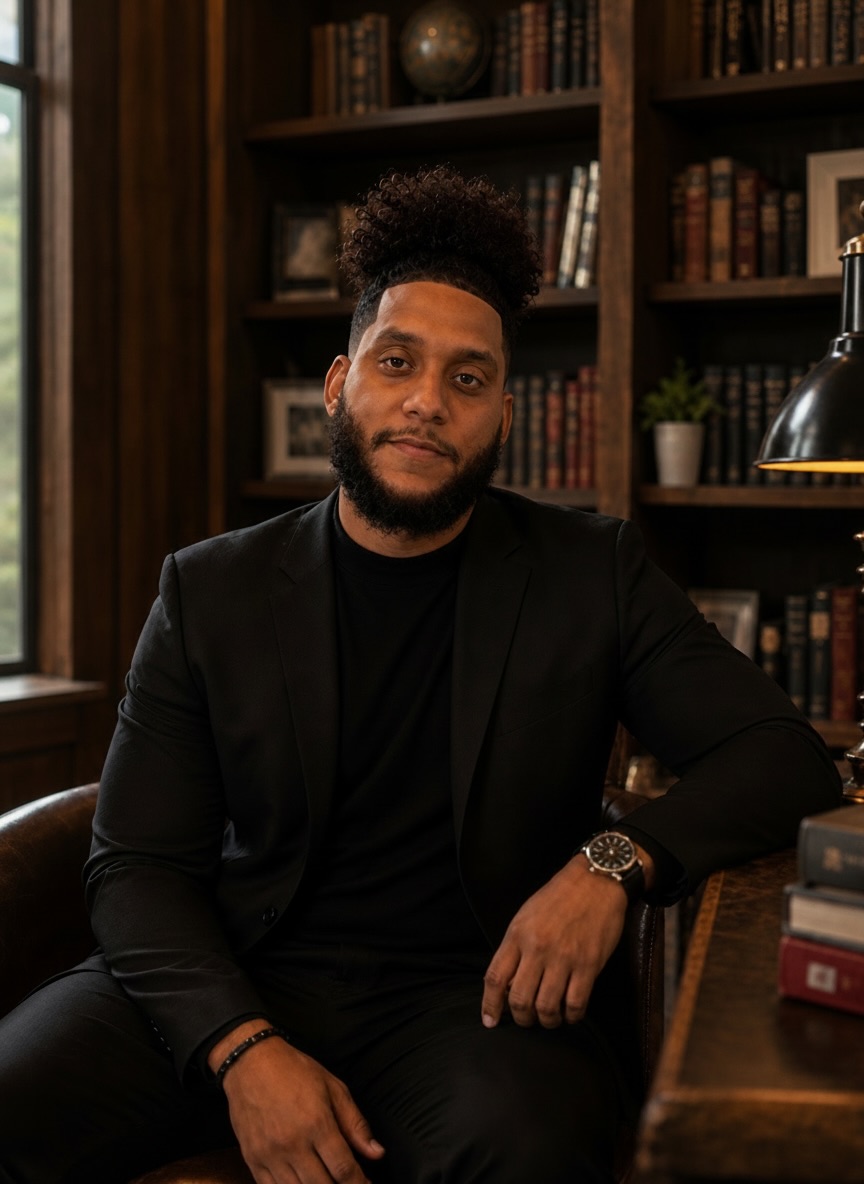
There was a moment this week when someone asked me how I was doing and I almost told the truth.
Almost.
We were at a coffee shop in Echo Park. One of those places where the light comes in at an angle that makes everything feel slightly staged. They asked the question the way people ask it when they actually want to know—not as a greeting, as an invitation. And I had the real answer ready. It was right there. I could feel the shape of it in my chest, the specific weight of what I'd been carrying for the past ten days.
Then something in me clicked back into performance mode.
I said I was good. Said work was moving. Said the usual things you say when the real answer is too heavy to hand someone over coffee.
They nodded. We moved on. And I sat there for a few minutes after, aware that I had just done the thing I've been trying to unlearn for years.
The Pattern I Keep Meeting
I've been thinking a lot about tenderness lately. Not the idea of it—the practice. What it actually costs to stay soft when everything in you has been trained toward efficiency. Toward not being too much. Toward making other people comfortable with your presence by trimming the edges off your feelings before you let them show.
That training starts early for men. Especially Black men. You learn that tenderness is a luxury you might not be able to afford. That the world doesn't make space for your softness the way it makes space for your strength. That being vulnerable in the wrong moment can cost you something you can't get back.
So you learn to close the distance between what you're feeling and what you're willing to show. You learn to be okay. To be fine. To be good when someone asks.
And after a while, you forget there's another option.
I've been working through this in the sessions I built—the Pattern work, specifically. The part that asks: what shape does avoidance take in you? Because for me, it's not dramatic. I don't disappear. I don't shut down completely. I just—edit. In real time. I take the thing I'm feeling and I run it through a filter that makes it smaller, cleaner, easier for someone else to receive.
And I tell myself that's consideration. That's maturity. That's knowing how to hold space without collapsing it.
But really, it's just another way of not showing up fully.
What the Writers Are Saying
I've been re-reading Gayl Jones lately. There's a line in Corregidora that's been sitting with me: the way she writes about what it means to carry something so long you can't remember what your body felt like before the weight.
That's what this feels like sometimes. Like I've been holding a particular kind of stillness for so long that the softness underneath it feels unfamiliar. Dangerous, even.
I think that's what a lot of the literary fiction coming out now is trying to name. Not just the wound—everybody's been writing about the wound. But the specific exhaustion of performing wholeness when you're still figuring out what broke in the first place.
Percival Everett does this differently—he writes men who are so tired of being legible that they stop trying. There's something in that refusal that feels important. Like maybe the first step toward real tenderness is refusing to make your pain easy for other people to consume.
I don't know if I'm there yet.
The Cost of Staying Open
The truth is, I'm still afraid of what happens if I show up without the armor.
Not because I think people will reject me. I've been rejected before. I know how to survive that.
I'm afraid of what I'll find when I stop performing for a second. When I stop managing how I'm perceived and just—exist. What if the thing underneath all the careful presentation is something I don't recognize? What if it's messier than I've been willing to admit?
That's the real work, I think. Not learning how to be tender with other people—learning how to be tender with yourself first. Learning how to sit with the parts of you that don't make sense yet. The parts that are still grieving things from ten years ago. The parts that are still angry about something you told yourself you'd forgiven.
The parts that almost told the truth in a coffee shop and then didn't.
I don't have a clean answer for this yet. I'm not even sure I'm supposed to. Maybe the point isn't to arrive at some final version of myself where tenderness comes easy and I never edit in real time. Maybe the point is just to notice when I'm doing it. To catch myself mid-performance and ask—who is this actually for?
Because most of the time, it's not for them.
It's for me. It's the old instinct that says if I can just be easy enough, manageable enough, not-too-much enough, then I'll be safe.
But I'm learning—slowly—that safety built on hiding isn't safety.
It's just a different kind of alone.
So I'm sitting with this. The discomfort of staying open when every instinct says to close. The labor of tenderness when the world rewards hardness. The specific courage it takes to say I don't know yet instead of I'm good.
If you're sitting with something similar—if you're trying to figure out how to hold your own weight without disappearing under it—the work that built this in me is at /the-experience.
Shop the books from this essay
- Corregidora — Gayl Jones
Bookshop.org supports independent bookstores — every purchase splits revenue with an indie shop of your choice. Affiliate links; Joseph earns a small commission at no cost to you.