
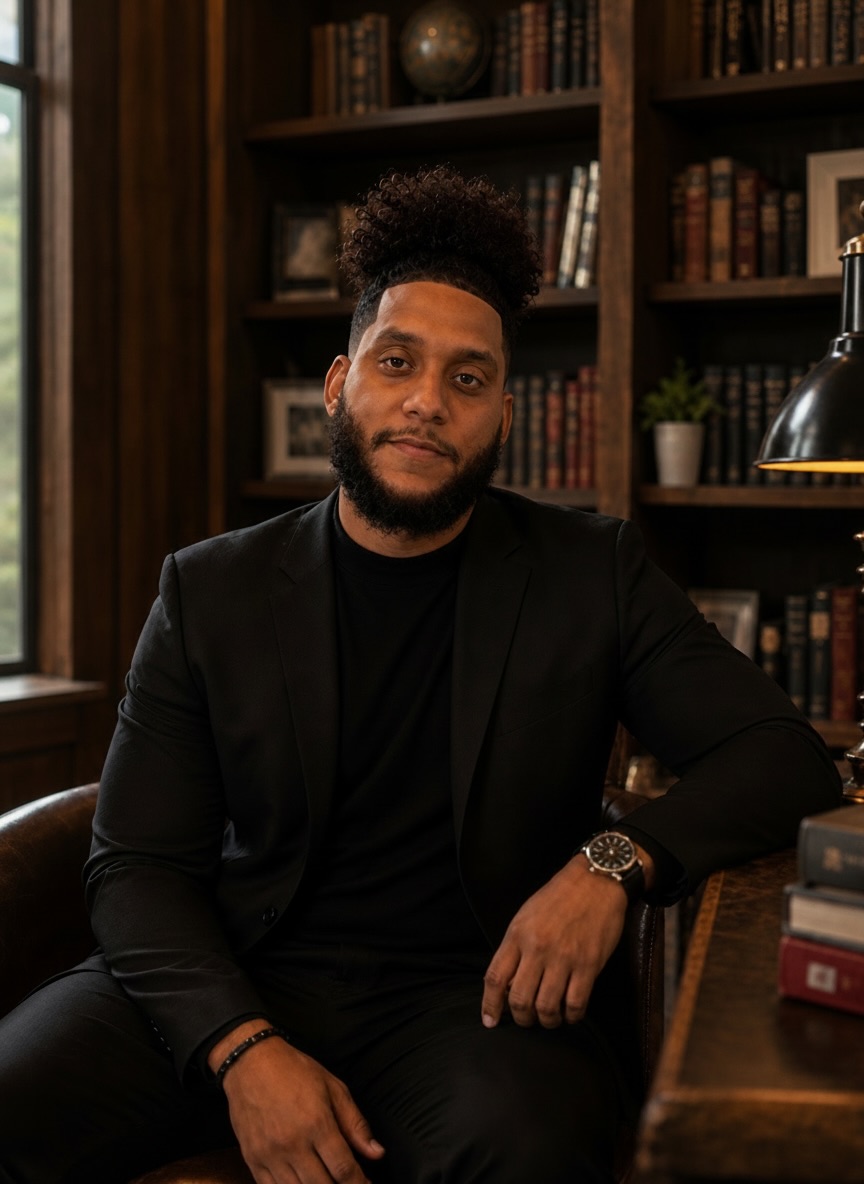
I wrote Loverboy, Still because I kept seeing the same man in different rooms.
Different cities, different eras, different circumstances — but the same quiet devastation. A man who loved deeply and lost often, who showed up for people who didn't show up for him, who carried wounds he never named because naming them felt like weakness. A man who had been taught that strength meant silence and care meant sacrifice, and who spent years trying to reconcile those lessons with the person he actually wanted to be.
That man became Gregory Mitchell, the protagonist whose voice carries the entire novel. And in building him, I realized I wasn't just writing about heartbreak. I was writing about the specific education Black men receive about love — the unspoken curriculum that teaches us to endure rather than express, to provide rather than ask, to be strong in ways that make us smaller.
The Loverboy Isn't Who You Think He Is
When people hear "loverboy," they think of someone reckless. Impulsive. A man who falls too fast, loves too loud, burns through relationships without learning anything.
That's not Gregory.
Gregory is careful. Observant. The kind of man who notices everything — the specific way someone laughs when they're actually amused versus when they're being polite, the shift in energy when a room goes from comfortable to tense, the moment love starts requiring performance instead of just existing.
He's a loverboy in a different sense — he believes in love even after it's cost him everything. He keeps showing up. He keeps trying. Not because he's naive, but because walking away from softness entirely feels like a kind of death he's not ready to accept.
That tension — between what he's learned and what he refuses to let go of — is the engine of the book. Every chapter asks the same question in a new key: what does it cost to stay open when the world keeps teaching you to close?
Intimacy Without Armor
One of the themes I kept circling while writing this was the difference between intimacy and sex. They're not the same thing, and conflating them does damage I wanted to examine closely.
Gregory experiences intimacy in moments that never make it into the cultural conversation about masculinity. A conversation where someone actually listens. A laugh that lands at exactly the right time. The specific warmth of being remembered — not as a role or a function, but as a person whose details matter.
Those moments hit him harder than they should because he didn't grow up with them. His mother loved him the only way she knew how — through structure, provision, discipline. Warmth wasn't modeled. Affection didn't come with touch. He learned early that asking for reassurance made adults uncomfortable, so he stopped asking.
That hunger relocated. It didn't disappear — it just found new places to live. And every relationship that followed carried the echo of that original absence.
I wanted to write about desire that exists before it becomes sexual. The want that lives in a twelve-year-old sitting in a tree with a girl who just kissed him for the first time, not knowing what to do with the feeling except carry it quietly. The ache of being fourteen and realizing the woman you like is with someone else — not because you weren't good enough, but because you never said anything.
Gregory's love life isn't defined by conquest. It's defined by longing. By proximity without possession. By the specific grief of almost.
Brooklyn as Memory, Not Setting
The novel is set in Brooklyn, but Brooklyn isn't just a location. It's a texture. A temperature. A way of moving through the world that you carry with you even when you leave.
I grew up in Brooklyn — it shaped my cadence, my instincts, the way I hear a sentence before I write it. When I was building Gregory's voice, I needed him to sound like he came from somewhere specific. Not in a way that required explanation or translation, but in a way that felt lived-in. Authentic. Grounded in a place that raised him even when that raising was complicated.
The block Gregory grows up on isn't just geography. It's a character. It watches him. It talks. It forms opinions about him before he's finished forming himself. Every choice he makes — who he dates, how he carries himself, what he's willing to say out loud — is shaped by the awareness that nothing stays private for long.
That surveillance creates a particular kind of pressure. You learn to move carefully. To edit yourself in real time. To understand that love isn't just about two people — it's about everyone watching them.
Not as nostalgia, but as the place that taught me how to listen. How to notice. How to understand that the smallest gestures often carry the most weight.
What Grief Does When You Don't Name It
The novel opens with an absence. Gregory didn't grow up without love — he grew up without warmth. That distinction matters because it names something a lot of people feel but don't have language for.
His mother wasn't cruel. She wasn't absent. She just didn't know how to soften. And that left him reaching for warmth in ways he didn't fully understand until much later.
Then she arrives — the first woman who loves him without conditions, who sees him completely, who makes the hunger go quiet. And then she's gone. Not through conflict or betrayal, but through a fact he has no power over. An asthma attack. A hospital. Valentine's Day.
Grief that absolute doesn't just hurt. It relocates your understanding of safety. It teaches you that presence doesn't guarantee permanence. That love — no matter how real — can disappear without warning.
Gregory doesn't process that grief. He absorbs it. Quietly. The way he learned to absorb everything uncomfortable at home. And that unprocessed loss shapes every relationship that follows — not because he's broken, but because he's bracing.
I wrote those chapters carefully. I didn't want them to feel like trauma porn. I wanted them to feel like what grief actually is when you're thirteen and nobody gives you permission to fall apart — a weight you carry without naming, that gets heavier the longer you pretend it isn't there.
The Audiobook: Gregory's Voice, Not Mine
When I was building the audiobook, the question wasn't whether to narrate it myself. It was whether Gregory's voice could stand on its own.
The audiobook is performed in Gregory Mitchell's voice — the protagonist telling his own story, in the cadence and tone I built for him. It's not me narrating my life. It's a character I created, speaking with the specificity that first-person demands.
I wanted listeners to feel like Gregory was in the room with them. Not performing. Not explaining. Just — present. Honest. Speaking the way people speak when they're finally ready to say the true thing.
The first three chapters are available free at /audiobook. If the voice lands the way I hope it does, you'll understand why this story had to be told this way — why the page and the voice needed to work together to carry the weight of what Gregory is trying to say.
Why I'm Still Hopeful
The book doesn't end with Gregory hardened. It ends with him open. Still willing. Still believing love is possible even after everything he's been through.
That was the only ending that felt honest.
Because I've watched men armor up after heartbreak and call it growth. I've seen what happens when pain becomes identity. When endurance becomes the only skill you trust.
Gregory refuses that. Not because he's naive — because he understands that closing off entirely is its own kind of loss. That protecting yourself from harm also means protecting yourself from connection. That the opposite of pain isn't safety — it's numbness.
I wrote this book for men who were told that softness makes you weak. For anyone who grew up in a house that had everything it was supposed to have and still left them quietly reaching. For people who keep choosing love even when love keeps choosing them back in all the wrong ways.
And I wrote it for my sons — not so they'd recognize their father in these pages, but so they'd know their father was someone who paid close enough attention to the human heart to write about it with care.
If that sounds like a story you need right now, start with Chapter 1. It's free at /audiobook. Or grab the full book at /#purchase and meet Gregory where he begins — standing in the gap between who he was taught to be and who he's trying to become.
That gap is where the whole story lives.